By Chief Judge Kenneth M. Switzer, Nashville
Jane Salem, staff attorney extraordinaire, and final grammatical, citation, and stylistic editor of 90% of the trial orders you read, rails against the inside lingo of our comp world. The problem is we all have our own language. I just used “lingo.” Chances are some of you reading this have not encountered that word.
Lingo is different from “slang.” Every generation has its own slang. Yes, I grew up in the “beatnik” generation. That would be the 50s and 60s of the last century. Shocking, I know. My Halloween costume was a “beatnik.” (Look it up.) “Slide me some skin.”
Now my grandchildren have a whole new way of talking. It becomes apparent when I listen to them. They might use an expression that I don’t recognize or understand, but it’s perfectly acceptable among their age group. For example, I recently learned that if you like someone, you “vibe” with them. To me I would say, “I feel your vibe,” meaning I understand.
Their generation is used to communicating via messaging on their phones, and in addition to using words and phrases unfamiliar to me, they love acronyms: IDK, TBH, LOL, ICYMI, LMK, NGL, TMI, and RN. Shoot, LOL and TMI are the only ones I knew.
And don’t even get me started with modern day hieroglyphics – they call them emojis. (You’ve likely fallen into this trap and use them too, BTW.)
When it comes to workers’ compensation, we have our own language too, consisting largely of specialized terms, for example “maximum medical improvement” and “authorized treating physician.”
And we love to shorten them as acronyms. We 
As an example of how much we love our acronyms, read this little story called “Work Comp Alphabet Soup.”
To make a Workers’ Compensation Claim, you must first file a PBD with the BWC to get before the CWCC. When you initially file, your case gets sent to MOST for ADR.
There may be a treatment dispute, which will require UR—firstprivate, and then by the state medical director. A UR decision may be appealed to the CWCC within certain timeframes. After UR, you might return to ADR, which might result in a DCN.
While treating, you might be entitled to TTD or TPD. In either instance, you’ll need a note from an MD. One from a PA-C won’t do. An NCM can help with scheduling Dr. appts.
Sometimes you need a date of MMI to get a DCN. You may also get an IR from your ATP. Now your employer will want an IME (employer’s examination) to challenge your ATP’s IR.
If you have two different IRs, you can go to the MIRR and receive an independent IR, which carries a presumption of correctness only on C&CE. Now you’re ready for trial before the CWCC.
Seeking PTD, and it’s not for a first injury? The SIF might be liable. If you’re not found to be PTD from working, you’re probably still entitled to PPD.
A trial is either an EH or a CH, but could be concluded before then with a MSJ or MTD, but those all occur only after a SCH order.
When you have a trial, the TRE and TRCP apply, unless a rule of the BWC at 0800-02-21 alters the TRE or the TRCP.
If your hearing is an EH, the BOP is “likely to prevail at a hearing on the merits.” Witnesses can testify by affidavit or Rule 72 declaration. Witnesses who come in person may be excluded by THE RULE.
If you lose after an EH, you can file a NOA with the WCAB, who will issue an opinion ASAP, but no later than 7 business days after receiving the record. You can’t appeal an opinion of the WCAB in an EH setting.
If your hearing is a CH, your BOP is POE. Your ATP can testify on a C-32 form with a C-30A attached in lieu of a depo . Don’t forget the ATP’s CV. You may even have a VE who will rely on an FCE.
You can file an appeal with the WCAB after a CH or an MSJ. If you don’t like the WCAB decision, you can appeal to the TSC, which will refer your case to the Panel. The Panel will decide, and you can ask the TSC to review the Panel decision. They rarely do.
But don’t get a big head; believe me, SCOTUS will not accept an appeal. Your application there is DOA.
Of course, if the SOL passed before you filed your PBD, you’re … SOL.
Any questions? Contact the CC.
But she can’t give legal advice. File a CNR so you can get limited legal advice from an AA.
Did you get all that? If so, congratulations.
What’s my point? Well, for starters, we might love our workers’ comp alphabet soup, but chances are, “SRLs,” or self-represented persons, do not. The soup is too salty; those acronyms are just too chunky to digest.
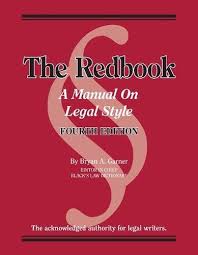
For that reason, at the trial court level, we follow Professor Bryan Garner’s rule for acronyms. Redbook Rule 12.3, “for the sake of clarity and readability, avoid acronyms that aren’t well-known.” (The previously mentioned staff attorney reads the Redbook on Saturday nights, while Judge Allen Phillips is engrossed in Larsen’s out-of-print treatise. I digress).
So, in an order on a motion or after an evidentiary hearing, you might see that an employee underwent an “MRI.” No one calls it “magnetic resonance imaging,” and they never did. But you might also see that an “authorized treating physician” ordered a “functional capacity evaluation,” not that an “ATP ordered an FCE.”
We try, but don’t always succeed, in making our orders as clear as possible. Avoiding excessive acronyms is just one small step toward that goal. So think about that when drafting your next pleading in our court, especially when your opposition doesn’t have a J.D.
And BTW many of you will be surprised to learn that according to my grandchildren, “I’m chill.”
Mazel tov.