
By Alyssa Williams, University of Tennessee Winston College of Law, Court intern
A common saying about learning the law is that it’s like “drinking out of a fire hose.”
That perfectly described my early experience interning for the Court of Workers’ Compensation Claims. However, after spending a few weeks here and attending the Education Conference a couple of weeks ago, I think I can scale back that analogy a bit. At this point, I’d describe it like “drinking from a power washer.”
Workers’ Compensation requires a law student to learn a tremendous amount of terminology quickly, whether it’s an authorized treating physician (ATP), maximum medical improvement (MMI), independent medical examination (IME), or temporary total disability (TTD). As if the terminology itself weren’t enough, almost every new term seems to have its own abbreviation to memorize. Fortunately, I have some of the best mentors to guide me along.
At the Education Conference, not only did I learn more about workers’ compensation, but I also learned about the people behind it. Along the way, I discovered that everyone seems to admire Fred Baker; Lauren Ray is especially passionate about ensuring injured workers receive their TTD; and Judge Josh Baker, sadly, was missing Bonnaroo.
Attendees could earn CLE credits for attending the conference. As a law student, however, I could only watch with envy, wishing those hours counted toward my own coursework. Unfortunately, they don’t.
I attended the conference on Wednesday and Thursday and had the opportunity to listen to a variety of informative presentations. Fred Baker talked about important case law developments in the Workers’ Compensation world. Some of the cases he discussed were so significant that even I recognized the names from my limited time working for the Bureau, including Edwards v. Peoplease and Taylor v. Dale’s Recycling.
Another highlight was the AI and Legal Ethics talk. As a current law student, I’m learning law in the midst of this new technology. It was interesting to see the similarities and differences between how law students and practicing attorneys use AI. The ethical dilemmas regarding AI remain largely the same between both, such as confidentiality, competence, and diligence issues. However, I hadn’t previously considered how AI will affect fees, billing, and client communication.
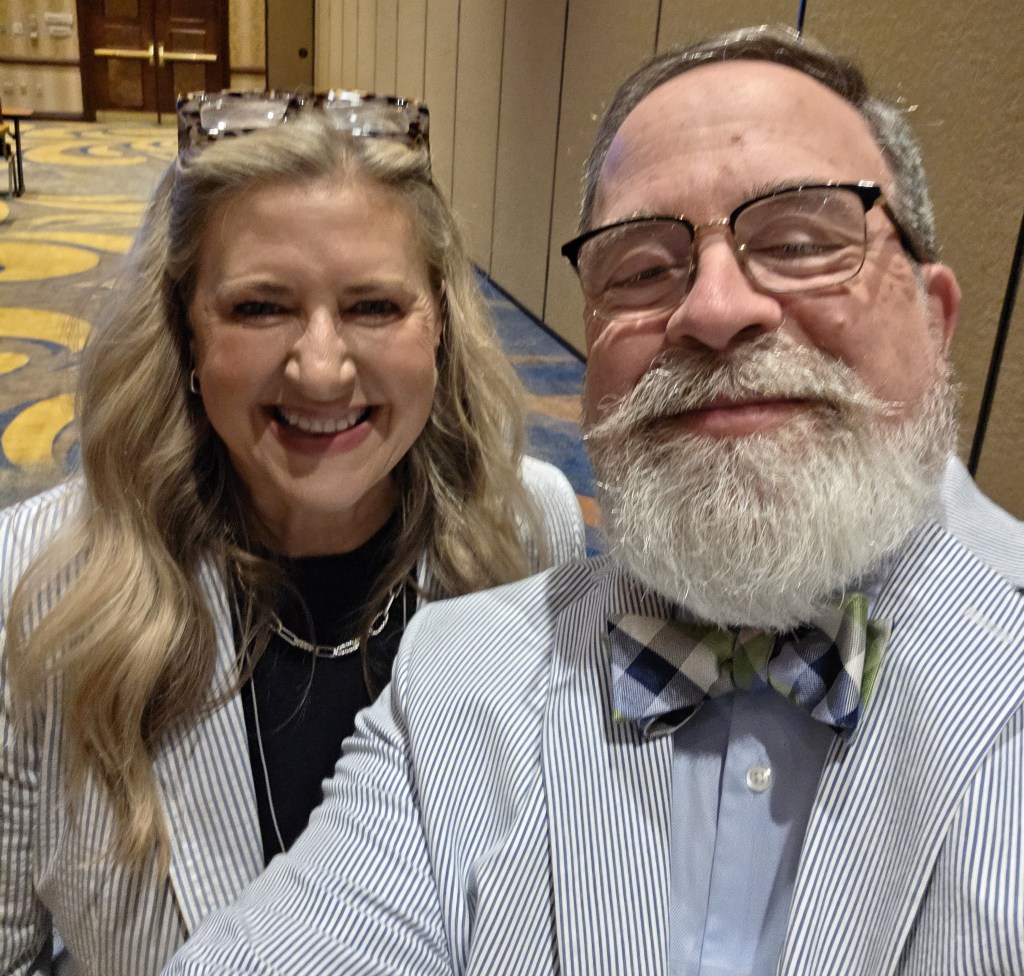
I also enjoyed hearing about various judges’ opinions on effective advocacy. Although these rules don’t yet apply to me, I learned a great deal about what judges expect from attorneys and the common pitfalls that advocates should avoid. I’m also considering investing in a seersucker suit, if appearing before Judges Lisa Lowe and Dale Tipps ever happens.
Of course, I also attended Dr. Matt Hearn’s discussion of the art of the brief. He discussed macro- and micro-level issues of clarity. At the macro-level, he focused on topics like organization and meeting readers’ expectations, while at the micro-level, he explained how to craft effective topic sentences and create coherence throughout a piece of writing. Meanwhile, Jane Salem shocked the crowd by telling them they can substitute “under” for “pursuant to,” and they no longer need to begin every brief with “COMES NOW the Employer/Employee, by and through the undersigned counsel…”
But the conference wasn’t just educational in terms of the law itself. It was also my first real opportunity to network outside of law school. I quickly realized that I still have plenty of room to grow as a networker, but it was also valuable to observe how experienced attorneys and judges interact with one another. Watching conversations unfold around me taught me as much about professionalism as much as the presentations did.
I picked up a few lessons in conference etiquette, especially at lunch. It turns out that trying to network while eating tacos is a skill in its own right (should we use forks?). Judging by the collective effort to avoid wearing our lunches, I wasn’t the only one still learning.
The Education Conference reminded me that learning the law is much more than memorizing statutes, cases, and acronyms. It’s also about learning to communicate effectively, think ethically, build professional relationships, and become part of a kindhearted community dedicated to serving others. While I still have a great deal to learn, the conference made the world of workers’ compensation feel a little less overwhelming and a little more familiar.
I may still be “drinking from a power washer,” but each day the stream feels a little more manageable.


Awesome article! Thank you Ms. Williams!
LikeLike