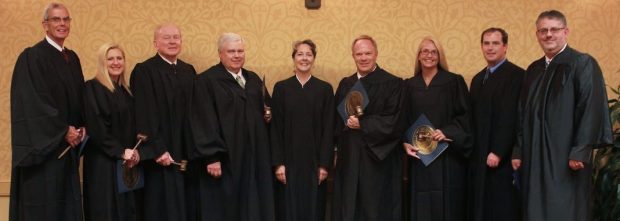
By Chief Judge Kenneth M. Switzer, Nashville
Chancellor Ellen Lyle, who swore in the original eight workers’ compensation judges in Tennessee, told us that our job would be easy if we would simply “follow the law.” That advice has guided us for almost 12 years now.
This article is about lawyers—both plaintiff and defense—and judges “following the law” when it comes to fee requests.
Section 50-6-226(a)(1) assigns responsibility to the judge. Employees’ attorney fees cannot exceed 20% of the amount of the recovery. Meanwhile, fees for attorneys representing employers are subject to review for reasonableness of the fee by a judge when the fee exceeds $10,000.00.
To assist judges when assessing the reasonableness of a fee, Tennessee Supreme Court Rule 8, Rules of Professional Conduct 1.5(a) identifies various factors to consider. They are:
(1) the time and labor required, the novelty and difficulty of the questions involved, and the skill requisite to perform the legal service properly;
(2) the likelihood, if apparent to the client, that the acceptance of the particular employment will preclude other employment by the lawyer;
(3) the fee customarily charged in the locality for similar legal services;
(4) the amount involved and the results obtained;
(5) the time limitations imposed by the client or by the circumstances;
(6) the nature and length of the professional relationship with the client;
(7) the experience, reputation, and ability of the lawyer or lawyers performing the services;
(8) whether the fee is fixed or contingent;
(9) prior advertisements or statements by the lawyer with respect to the fees the lawyer charges; and
(10) whether the fee agreement is in writing.
Rarely do the judges find themselves in a circumstance where one of us has concluded a requested fee is unreasonable. But it does happen.
Employee attorneys are more familiar with the fee approval process and always have an affidavit prepared for submission at settlement approvals. Those affidavits usually follow the Supreme Court standards verbatim.
Employer attorneys sometimes forget this requirement and have to file a request after the approval.
To approve a request, we must know the total amount requested. How can we approve a fee if we don’t know the sum you seek and how that amount was determined?
From a defense business perspective, we understand a concern about disclosing rates charged, and we readily acknowledge that. If you want us to review the details privately and not make the details part of a file, ask the judge to do so.
The statute says we must conclude that fees are reasonable. Again, we need to know the amount to do that. Further, the Supreme Court says, “here’s a way to determine a reasonable fee.”
So, we strongly suggest that you use the Supreme Court factors exactly as they state them in your fee affidavit. And please tell us the amount. Likely your fee will be approved.
Just remember to “follow the law.” Thank you.
Next week: a few pointers on fees in litigated claims.