By Alyssa Williams, Court Intern/2L, Winston College of Law, University of Tennessee-Knoxville

One of my favorite parts of law school has been watching both mock trials and oral arguments. After spending so much time studying their components and practicing one for an assignment, it was fascinating to sit in the digital audience and watch experienced attorneys argue before the Tennessee Workers’ Compensation Appeals Board.
Seeing oral arguments from the other side of the podium let me fully admire the preparation, strategy, and questioning that goes into one. Hands v. Fresenius Medical Care Holdings, Inc., argued on July 14, was one of the most interesting I observed during my internship.
Derrick Hands was working for Fresenius Medical Care Holdings, Inc. and injured his knee and back. Originally, both injuries were accepted as compensable. However, Fresenius later discontinued authorized treatment for the back, and Hands continued treating without authorization.
According to Mr. Hands, the unauthorized medical treatment expenses totaled $562,783. Meanwhile, the employer alleged it totaled $147,979.
After a compensation hearing in February 2026, the court issued an order holding that Mr. Hands’s injuries arose primarily out of and in the course of his employment, and he was entitled to workers’ compensation benefits.
The trial court ruled that Fresenius “shall pay Mr. Hands’s unauthorized medical bills . . . and pain management under the fee schedule,” with the employee’s attorney being awarded a 20% fee. Ultimately, Mr. Hands was awarded $80,219 in permanent partial disability benefits.
The central issue on appeal is whether an employer must pay the full amount of an employee’s unauthorized medical expenses or only the amount permitted under the fee schedule.
Employee’s Argument
Andrew Wener, counsel for Mr. Hands, said his main concern was the outstanding medical bills after the judgment. At trial, no party disputed the amount of medical bills, which a physician said was reasonable, necessary, and over 50% related to the back injury.
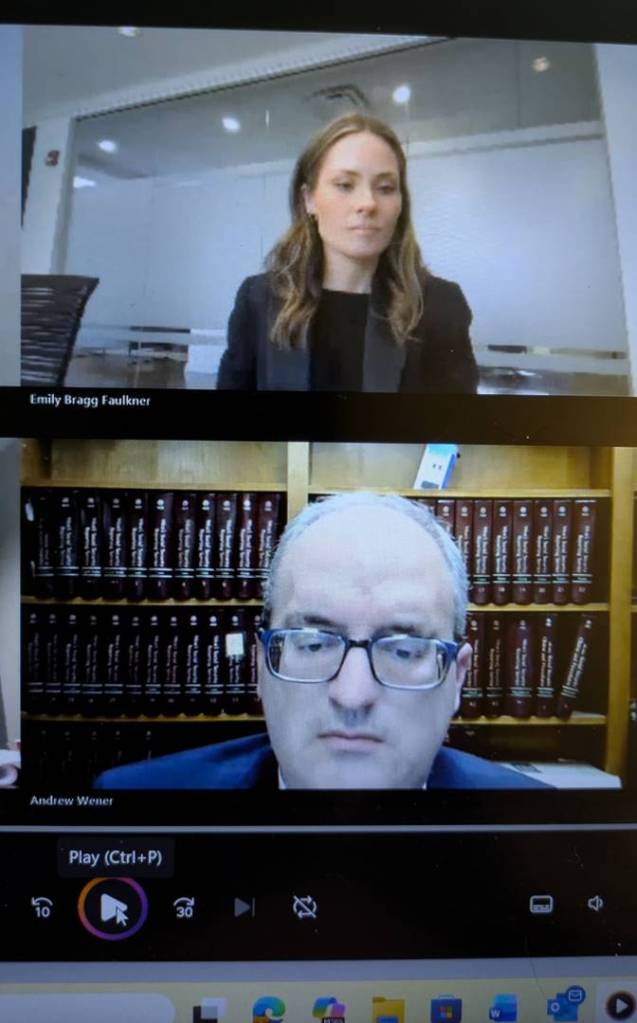
“Mr. Hands’ back surgery and treatment was unauthorized,” Wener said. “The only evidence at trial was the medical bills that were charged and owing. There was no contrary evidence to the reasonableness of the medical bills.”
Wener continued that the Court sua sponte ruled that the fee schedule applies—neither party requested that. Further, if these unauthorized medical bills were subject to the fee schedule, nothing would prevent the medical providers from suing Mr. Hands in another court because they weren’t parties to this workers’ compensation action and therefore wouldn’t be bound by its ruling.
However, Presiding Judge Timothy Conner noted statutes that seemed to dictate otherwise.
First, he noted that section 50-6-204(a)(3)(A)(iii) establishes that the employer’s liability shall be limited to the maximum allowable fees established in the applicable medical fee schedule. However, Wener argued that this limitation applies only to authorized medical treatment, not unauthorized treatment.
In response, Judge Conner observed that the statute doesn’t make that distinction, while Wener pointed to Tennessee case law from 1926 to the present recognizing the difference between authorized and unauthorized treatment.
The discussion then turned to section 50-6-122(b), which prohibits a medical provider from pursuing payment of a medical bill against an injured worker if the employer is responsible for that treatment under Workers’ Compensation law. However, Wener argued that his client can still be liable because he has a contractual agreement with those medical providers, leaving him responsible for the difference.
Wener maintained that, without clearer statutory protection, Mr. Hands could still be left responsible for hundreds of thousands of dollars in medical expenses.
“My client started in a hole, and now he’s in a ravine,” Wener said.
Employer’s Argument
Emily Faulkner, counsel for Fresenius, argued that Bragg v. Premium Services, LLC controls because the Board previously addressed the same issue and held that the employer was responsible for paying medical expenses under the fee schedule. Based on what she described as “controlling” precedent, Fresenius asked the court to deem Wener’s appeal frivolous and award attorney’s fees and expenses.
Faulkner explained that Bragg is factually and procedurally analogous, despite Wener’s contention that he raised a different issue: the workers’ compensation court lacks jurisdiction over bills for unauthorized medical treatment.
“In [Bragg], the appeals court held that the expenses associated with medical treatment of an injury adjudicated to be work related were payable by the employer subject to the fee schedule,” Faulkner said.
Faulkner explained that all the cases decided before the fee schedule was initiated in 2014 were irrelevant. Wener only cited two or three cases that were decided after the fee schedule, and he largely ignored Bragg in his brief. Because Wener “knew or should have known” that this controlling precedent would leave little chance of success, this appeal was a “waste of everyone’s time.”
However, Judge Conner pushed back on the notion that Bragg was controlling. The Tennessee Supreme Court hadn’t ruled on this issue before, and Bragg was issued by this very Board. This means, while the Appeals Board considers this as precedent, they’re not controlled by Bragg. Faulkner, regardless, stated that Bragg is “indistinguishable,” and therefore, its precedent should be followed.
Faulkner further found no support in section 50-6-204 for Wener’s argument that it applies only to authorized medical bills. Finally, Faulkner stated that she didn’t understand how the totals for the medical bills ended up being so different, but regardless, if Mr. Hands is pursued for payment of outstanding medical bills, the employer would instead have to address those claims.
The Decision: TBD
Because it’s a compensation order, the Board has 45 calendar days from the date of arguments to issue the opinion.
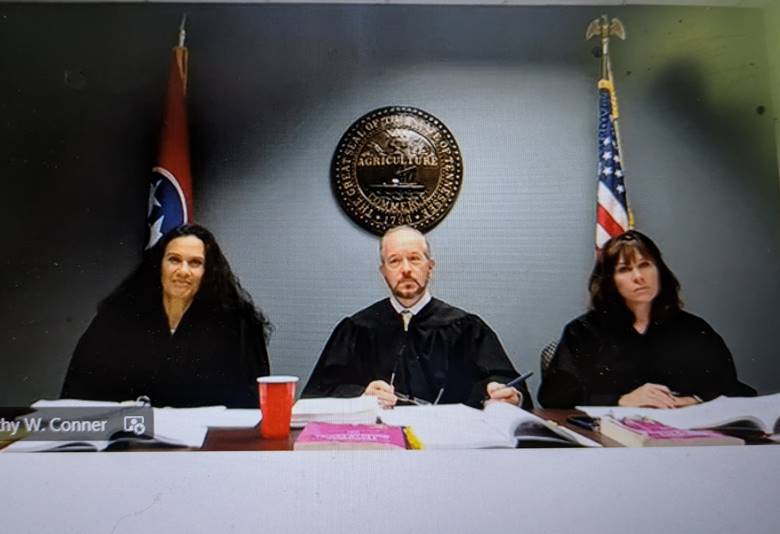
Appeals Board Judges Pele Godkin, Timothy Conner, and Meredith Weaver.
Parting Words
Although this case seemed like a technical dispute over the fee schedule and statutory language, it ultimately came back to a very practical question: who’s left holding the bills, and how much can/should be paid?
Workers’ compensation law is full of statutes, regulations, and decades of precedent. But behind those authorities are injured workers, employers, insurers, and medical providers whose financial responsibilities depend on how a few lines of text are interpreted.
And, obviously, it reminded me of how appellate advocacy is different from trial advocacy. Every question from the Board forced counsel to explain not only what the law says, but why their interpretation made the most sense when read alongside the rest of Tennessee’s workers’ compensation laws. An attorney must be deeply ingrained in their case, memorizing every detail, to navigate those questions in real time.
As a law student, it’s easy to think of appellate opinions as polished, finished products sitting neatly in a casebook. But, before a court announces what the law is, both judges and advocates spend time wrestling with the strengths and weaknesses of each position. Watching oral arguments unfold live serves as a reminder that every published opinion really begins as a conversation.


One thought on “Board Weighs Fee Schedule for Unauthorized Treatment”