By Chief Judge Kenneth M. Switzer, Nashville
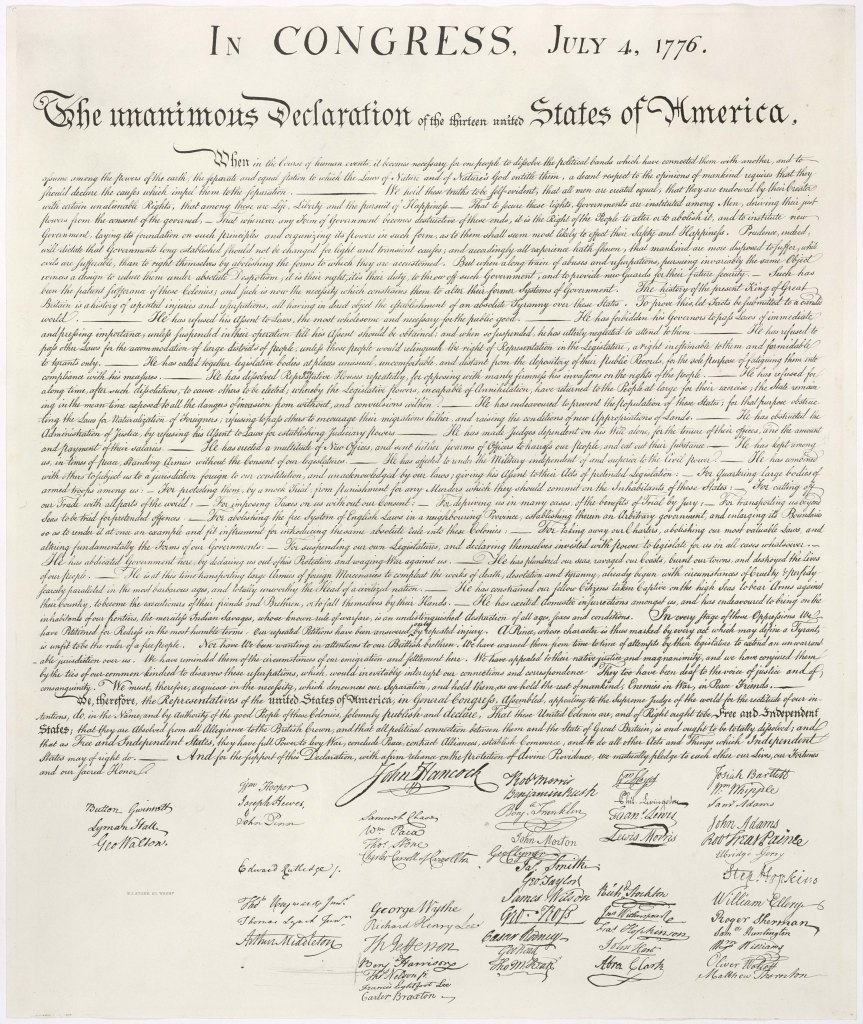
Fifty-six men signed the Declaration of Independence. Benjamin Franklin was the oldest at age 70 – younger than I. One 23-year-old signed as well, Edward Rutledge.
If you look at a copy of the actual document, each signature is legible. Some are quite fancy. And John Hancock famously signed in a large fashion, purportedly saying something about he didn’t want any confusion about his involvement.
If anyone should’ve wanted to hide their identity with a sloppy signature, it would’ve been one of these 56 men. Their actions were clearly treason at the time. Yet, we see readable and stylish signatures.
The judges of the Court of Workers’ Compensation Claims approve 8,000 to 9,000 settlements each year. We see so many illegible signatures that it has become quite humorous. From simple, straight lines, to what I call “squiggly” lines and other imaginative etchings. Occasionally I get a readable signature. Taylor Pruitt of Feeney & Murray in Nashville has the most stylish signature I’ve ever seen, and it’s totally readable: even has an 18th Century flair to it.
So, what’s the big deal, you say?
In a vast majority of cases, most defense firms send someone other than a partner to present settlements. These are usually younger attorneys learning the ropes. Unfortunately, the partner’s name is on all the documents. Almost never do we even see the young attorney’s name as an option under the signature line. So, what does the young attorney do? They make some type of scribbling on the line, purporting to be the partner’s signature.
Or, occasionally we come across an affidavit/declaration from an employee requesting a hearing, whose signature looks amazingly like his or her attorney’s.
Now allow me to digress a bit. Recently, the Board of Professional Responsibility censured an attorney who signed someone else’s name on a legal document – a notary seal – without noting they were doing so “with permission.” The Board concluded: “By these acts Attorney X has violated Rules of Professional Conduct 4.1(truthfulness in statements to others) and 8.4(c) (conduct involving dishonesty) and is hereby Publicly Censured for these violations.”
Granted, gray can exist amid black and white. A new attorney signing on behalf of a partner or client without disclosing it might seem harmless.
But shouldn’t we all want to do things the right way? We’re attorneys and made certain oaths to do what the law requires, right?
So, when you send that associate over for an approval, please either put their name as an option under the signature line, or make sure that if they’re going to sign your name, they do it legibly and note their name and bar number (legibly again) and write “with permission.” It saves time and reputations, and prevents an embarrassing delay in the proceedings.
And when requesting a hearing, the employee must sign the declaration/affidavit. Yes, it’s an inconvenience. But your reputation for honesty really does matter. And it goes to weight the judge should give that evidence at trial.
Okay, I’m done. Happy 250th birthday, America.

 From the Bench
yes
D. Brett Burrow,
Attorney-at-Law
LikeLike