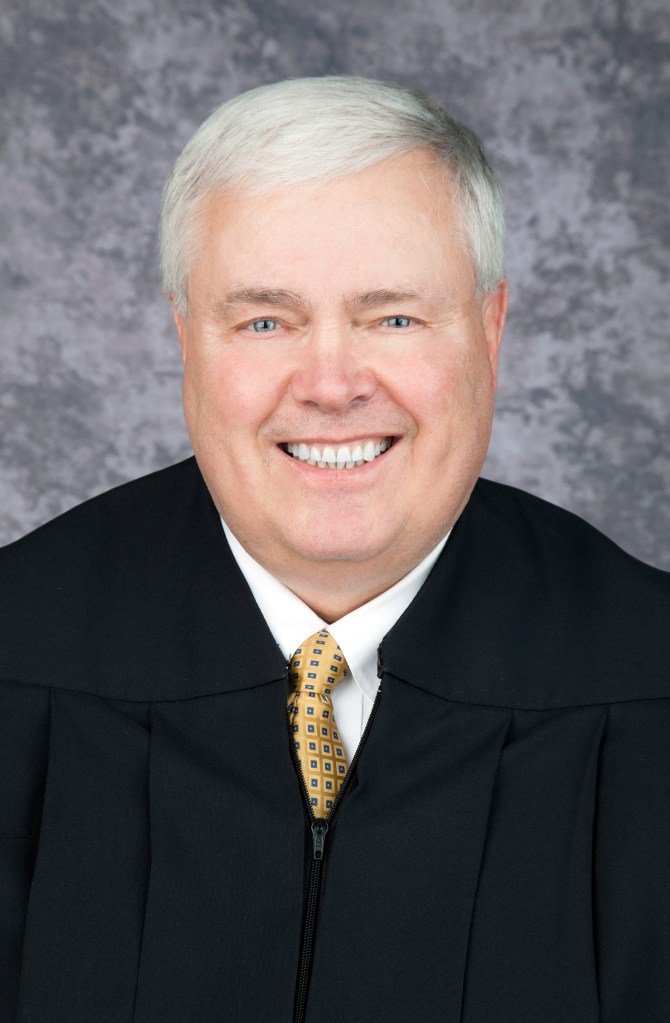
By Judge Thomas Wyatt, Chattanooga
A favorite “chicken or egg” discussion is, are we a product of our experiences, or are our experiences a product of who we are?
At the Court of Workers’ Compensation Claims, we see all varieties of workers, from office personnel to truck drivers, and from health care providers to construction workers. I often wonder how the workers I see ended up in the job on which they were injured. Was it environment, education, skill, or a personal preference that landed the employee’s job? Or was it the random intersection of a job opening up at a time of financial need that led the employee to their fateful day of injury?
We never fully learn the whole story, if in fact one exists. In surveying the 12 judges and four staff attorneys in our Court, I found that few of us foresaw where we ended up. In fact, few of us even saw ourselves as lawyers as we considered what we would become “when we grow up.”
But the experiences of three of our judges did point toward a career in law. Judge Amber Luttrell says she knew early in life that she wanted to be a lawyer (her parents said it was because she was always so argumentative). That enabled her to chart an educational course that led to law school, a career as a trial lawyer, and today, her position as a workers’ compensation judge.
Judges Lisa Lowe and Audrey Headrick had some natural direction toward a career in law, too. Judge Lowe’s father practiced law, and she worked in his office in her formative years. Judge Headrick obtained a degree in English literature but found employment in law offices for eight years before law school.
In contrast to the experiences of these judges, randomness seems to have played a far greater role in the paths to a legal career experienced by the rest of our group. I, for instance, considered a career in public administration or as a history professor before I took the law school admission test almost as a lark. Similarly, none of the others in our group visualized a legal career when they first seriously considered what they would become in life. However, the non-legal vocational experiences of our group did prepare us for the work we do today.
For instance, Chief Judge Kenneth Switzer was going to be a Marine or a high school basketball coach. Even after he became a lawyer, he kept his foot inside the sports world by becoming a football official. That work no doubt gave Judge Switzer excellent training in officiating over a working group of 16 independent and opinionated lawyers, each used to making decisions without much oversight.
Also, the Court’s editors extraordinaire, Jane Salem and Sarah Byrne, had careers as writers and editors before practicing law. Those positions served as great training for the critical contributions that they provide.
The work in our Court involves meticulous application of statutes, administrative regulations, and procedural and evidentiary rules to differing fact situations. While some of the early vocational ideas of our group seem to have little bearing to a legal career, those aspirations reveal an underlying disposition to the meticulous work we do.
Staff attorney Traci Haynes considered a career in law enforcement at one time. Staff Attorney Taylor Skees first felt led to pursue an academic calling that would require him to become fluent in either Japanese or Spanish.
Some of our judges once seemed headed toward artistic careers. I’m not artistically inclined but know enough about excellence in an artistic field to understand the artist must have persistence and attention to detail. Those attributes certainly describe Judge Pamela Johnson, who once taught dance and worked as a choreographer, and Judge Dale Tipps, who has both performed and directed instrumental and vocal presentations.
Judges Joshua Baker and Shaterra Marion considered technical professions before turning to the law. Judge Baker worked as an accountant and considered a career in engineering, while Judge Marion considered a career in athletic compliance or engineering.
Judges must be skilled in dealing with people. I and several of our judges worked in sales at one time. Of course, trial attorneys are both sales persons and actors by necessity. Judges Brian Addington’s, Allen Phillips’s, and Robert Durham’s early vocational aspirations reveal an underlying ability to interact with people. Had they not become lawyers, Judges Addington and Phillips would likely have pursued positions at battlefield parks, where they could interpret historical events for members of the public. Judge Robert Durham contemplated a career in ministry and has served many years as a children’s and youth minister at his church.
Like most of our contemporaries, the members of our group worked a variety of non-legal jobs in our teen, college, and, for some, post-college years. Time and space doesn’t allow for discussing all of those in detail. However, see if you can match the person with a job that they once performed:
- Judge Kenneth Switzer
- Judge Brian Addington
- Judge Lisa Lowe
- Judge Pamela Johnson
- Judge Thomas Wyatt
- Judge Audrey Headrick
- Judge Robert Durham
- Judge Joshua Baker
- Judge Dale Tipps
- Judge Allen Phillips
- Judge Amber Luttrell
- Judge Shaterra Marion
- Staff Attorney Traci Haynes
- Staff Attorney Jane Salem
- Staff Attorney Sarah Byrne
- Staff Attorney Taylor Skees
- Gerber Baby Food sales person
- Cocktail waitress
- AAA dispatcher
- Security guard
- Jewelry sales person
- Refreshment cart driver at golf club
- Laborer at stone yard
- Gift wrapper
- Restaurant server
- Subway sandwich builder
- Men’s clothing sales
- Middle school teacher
- Intern, non-profit organization
- Bartender
- Electrician helper
- Majorette
The answers are below.
Our experiences certainly mold us in some shape, form, or fashion. But understanding human behavior cannot be distilled to any shortcut formula. Sometimes during the same day, I react differently to identical stimuli. It depends on the mood I’m in.
So the great take-away from this little article is to discard stereotypes and revel in the truth that, as the Bible says, we are all fearfully and wonderfully made.

This goose at Radnor Lake State Park in Nashville wants to be a yoga instructor when she grows up. She held tree pose for several minutes. Impressive. Photo by Jane Salem, staff attorney, Nashville.
ANSWER KEY:
Judge Switzer: Men’s clothing sales; Judge Addington: Electrician helper; Judge Lowe: Restaurant server; Judge Johnson: Majorette (at the University of Tennessee, of course!); Judge Wyatt: Gerber baby food sales; Judge Headrick: Jewelry sales; Judge Durham: Laborer at stone yard; Judge Baker: Bartender; Judge Tipps: Middle school teacher; Judge Phillips: security guard; Judge Luttrell: Intern, non-profit organization; Judge Marion: Gift wrapper; Staff attorney Traci Haynes: Refreshment cart driver at golf club; Staff attorney Jane Salem: Cocktail waitress; Staff attorney Sarah Byrne: Subway sandwich builder; Staff attorney Taylor Skees: AAA dispatcher.

 From the Bench