By Judge Brian Addington, Gray

Elijah McCoy was the son of escaped slaves. Born in Canada in 1844 and educated in Scotland as a mechanical engineer, he moved to the United States as a young man and settled in Ypsilanti, Michigan.
The only place he could find work was as a lineman and oiler on the railroad. During his time there, he discovered a way of mechanically oiling the engine. This saved a great deal of time for the railroad, as the train often had to be stopped and oiled by hand. His device worked so well that he had it patented and soon it was the most popular automatic oiler on the market. Workers often asked for engines outfitted with the “real McCoy” oiler.

McCoy was very successful, patenting 57 inventions and after his death being inducted into the National Inventors Hall of Fame.
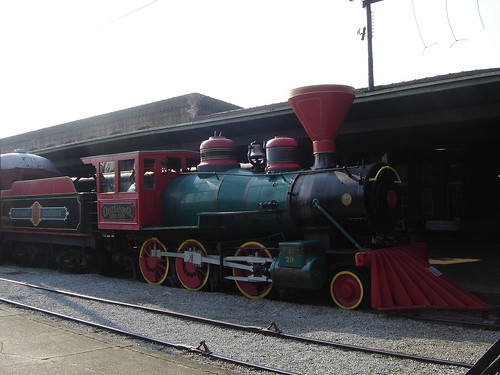
What does this have to do with Workers’ Compensation in Tennessee? Railroads are an important part of commerce in Tennessee. Thousands of miles of railroads are here, which are highly important for domestic commerce. Many railroad companies operate in Tennessee. (Probably the one with the coolest name is the Walking Horse Railroad between Shelbyville and Wartrace. But also, let’s not forget the Chattanooga Choo Choo, made famous by Glenn Miller.)
When it comes to railroad worker injuries, much depends on whether the injured worker was involved in furthering intrastate or interstate commerce.
Congress covered railroad workers engaged in furthering interstate commerce by the Federal Employers Liability Act. This Act was passed in 1908 and amended in 1939. Under FELA, the injured worker must prove that the railroad was negligent in failing to provide a reasonably safe workplace and/or the equipment for work. However, payments made under FELA are often more than an injured worker could receive from workers’ compensation. An injured worker can file a FELA claim in federal or state court.
Tennessee amended its workers’ compensation laws in 1941 to cover all intrastate railroad workers and in 1943 to exempt employees covered by FELA. The case of Petty v. Tennken Railroad, Inc. discussed the above-mentioned statutory history and the reasoning used to determine whether the railroad was engaged in intrastate or interstate commerce. The Court looked to whether the injured worker’s duties furthered interstate commerce.
In Petty, the injured worker was an agent in training performing clerical duties, which included paperwork, switching cars, and dispatch. On the day he was injured, Petty was ordered by his supervisor to take a load of manuals to the depot in Trenton, Tennessee, and while there, he injured his low back. He filed a workers’ compensation claim instead of a FELA claim. The Petty court found that his duties had a direct, close, and substantial effect upon whether or not the railroad’s trains operated and were directly connected to the furtherance of interstate commerce. It reversed the trial court and dismissed Petty’s workers’ compensation suit.
So for workers involved in interstate commerce, “the real McCoy” is federal or state court under FELA. However, injured railroad workers involved only in intrastate commerce can petition the Court of Workers’ Compensation Claims. I’m sure either choice will lead to the same questions as posed in Petty.

 From the Bench